Kalevala Day (Finnish Culture Day) 28th of February

Posted in Celebration/National Day 

“Words shall not be hid
nor spells buried
might shall not sink underground
though the mighty go.”
― Elias Lönnrot, The Kalevala

Kalevala Day (Finnish Culture Day) 28th of February
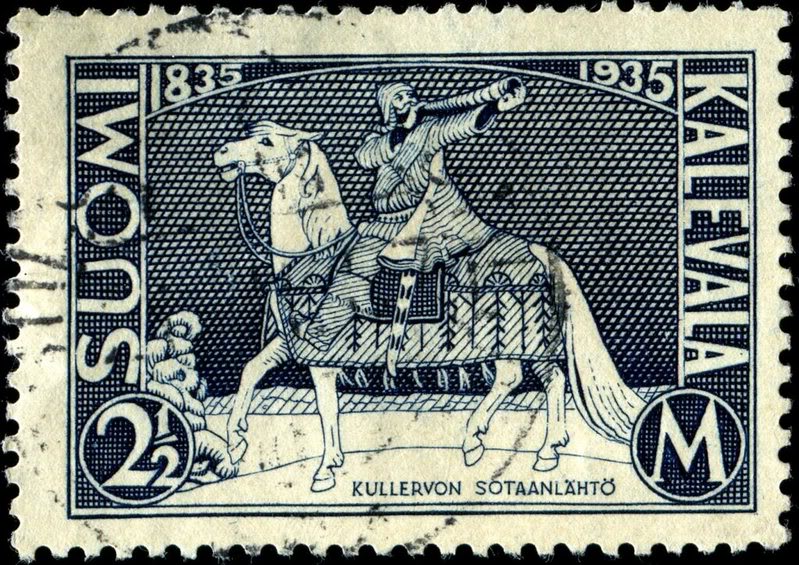
main-2

The Kalevala or The Kalewala (/ˌkɑːləˈvɑːlə/; Finnish: [ˈkɑle̞ʋɑlɑ]) is a 19th-century work of epic poetry compiled by Elias Lönnrot from Karelian and Finnish oral folklore and mythology.

It is regarded as the national epic of Karelia and Finland and is one of the most significant works of Finnish literature. The Kalevala played an instrumental role in the development of the Finnish national identity, the intensification of Finland’s language strife and the growing sense of nationality that ultimately led to Finland’s independence from Russia in 1917.

The first version of The Kalevala (called The Old Kalevala) was published in 1835. The version most commonly known today was first published in 1849 and consists of 22,795 verses, divided into fifty songs (Finnish: runot). The title can be interpreted as “The Land of Kaleva” or “Kalevia”.
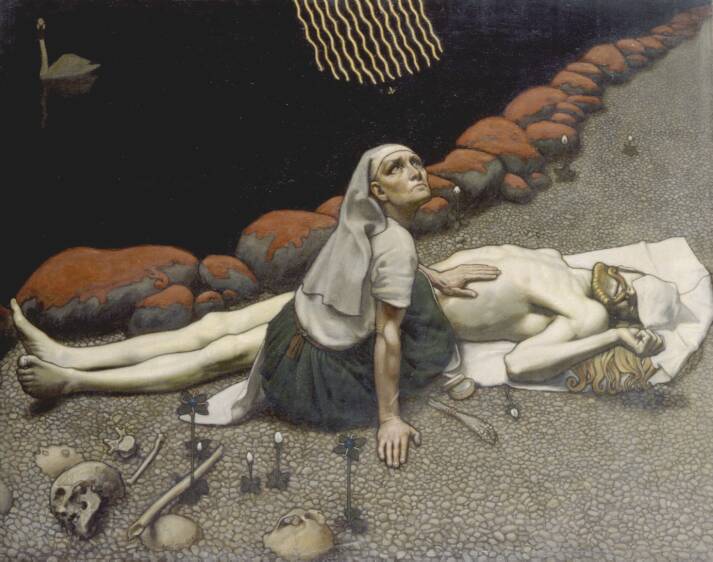
gallen_kallela_lemminkainens_mother

Kalevala Day (Finnish Culture Day) in Finland 28th of February

In honour of Kalevala Day 28th of February, Celebration

main

“Words shall not be hid
nor spells buried
might shall not sink underground
though the mighty go.”
― Elias Lönnrot, The Kalevala

Kalevala Day (Finnish Culture Day) in Finland 28th of February

main 2

The Kalevala or The Kalewala (/ˌkɑːləˈvɑːlə/; Finnish: [ˈkɑle̞ʋɑlɑ]) is a 19th-century work of epic poetry compiled by Elias Lönnrot from Karelian and Finnish oral folklore and mythology.

It is regarded as the national epic of Karelia and Finland and is one of the most significant works of Finnish literature. The Kalevala played an instrumental role in the development of the Finnish national identity, the intensification of Finland’s language strife and the growing sense of nationality that ultimately led to Finland’s independence from Russia in 1917.

The first version of The Kalevala (called The Old Kalevala) was published in 1835. The version most commonly known today was first published in 1849 and consists of 22,795 verses, divided into fifty songs (Finnish: runot). The title can be interpreted as “The Land of Kaleva” or “Kalevia”.

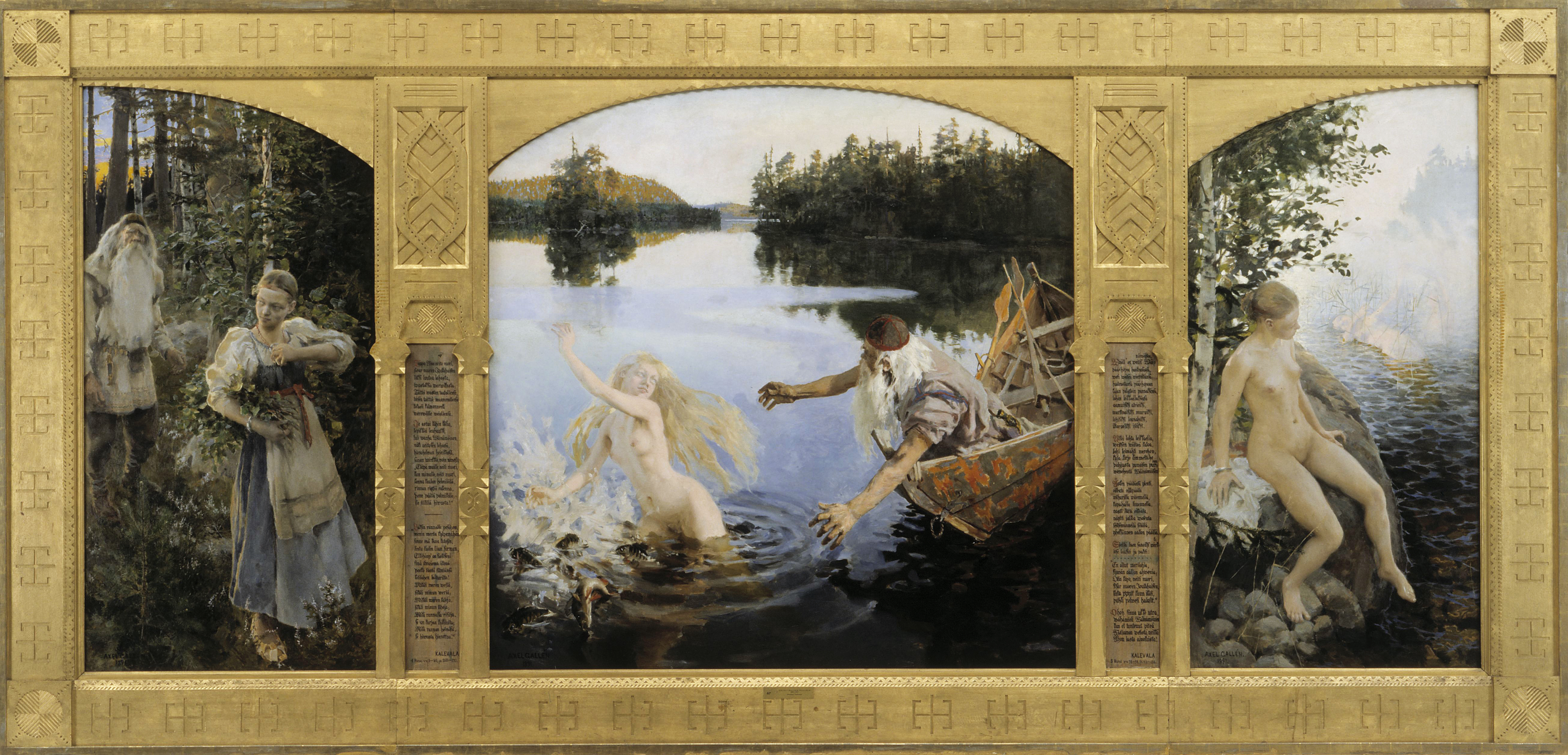
Gallen_Kallela_The_Aino_Triptych

gallen_kallela_lemminkainens_mother

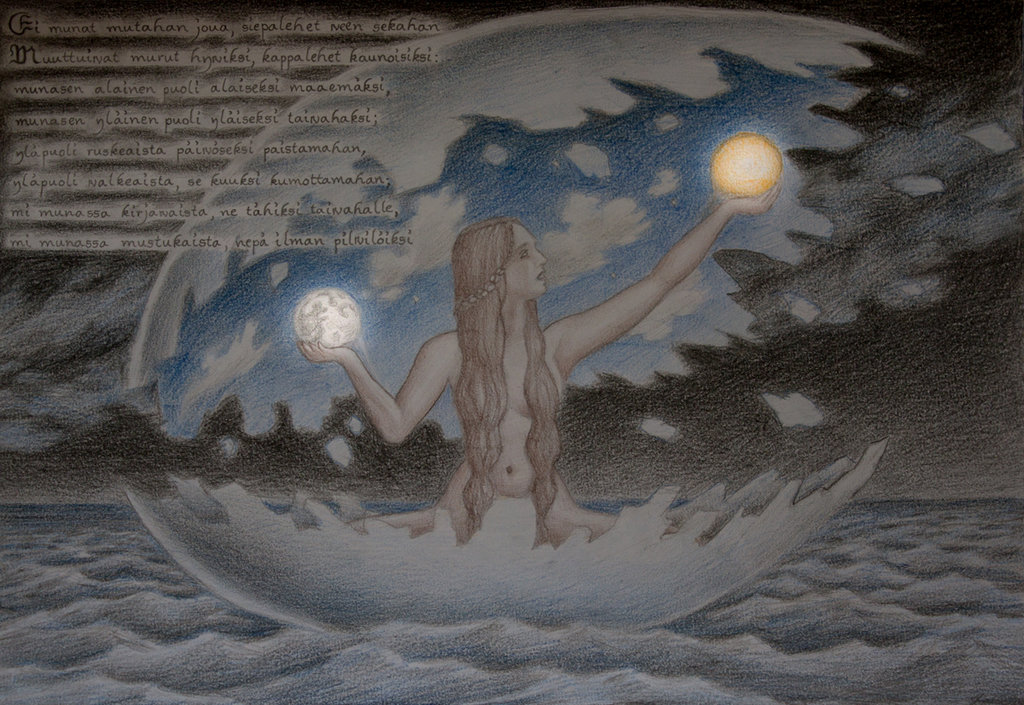
kalevala_series___ilmatar    kalevala_series___ilmatar_2jpg

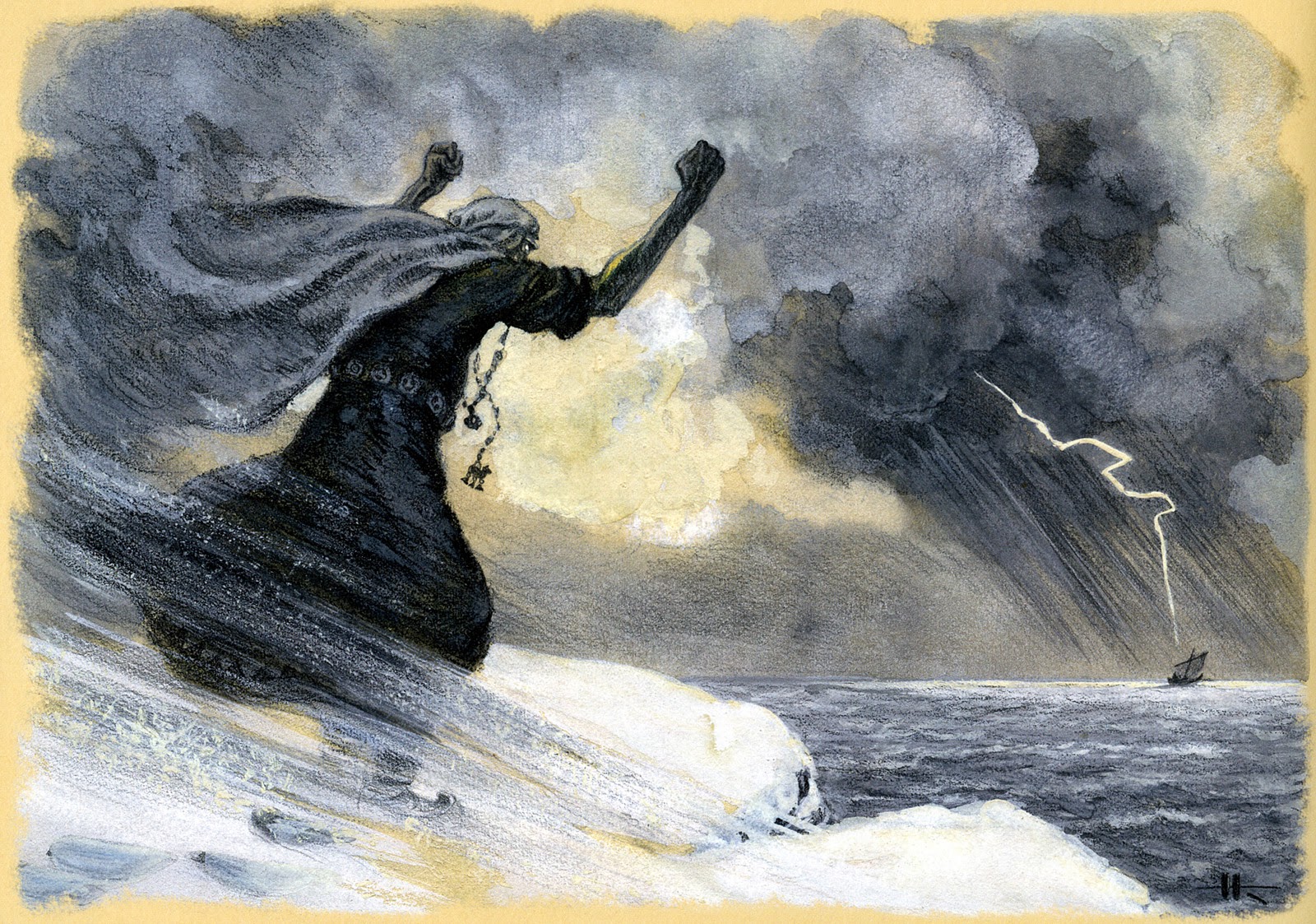
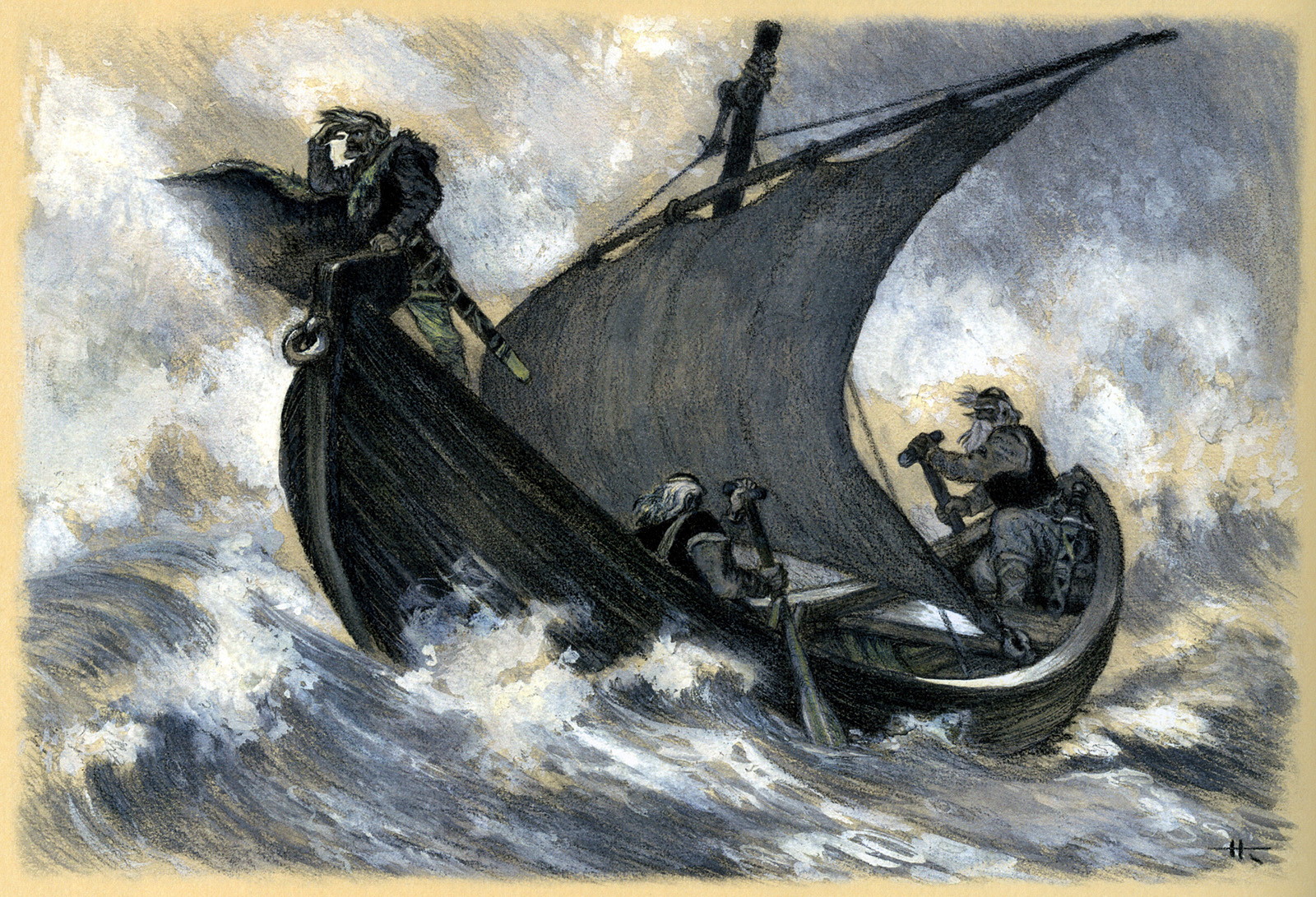
nicolai kochergin_kalevala_19_the mistress of pohjola chases the vainamoinens boat_01    nicolai kochergin_kalevala_16_vainamoinen and ilmarinen go to pohjola to take the sampo_02

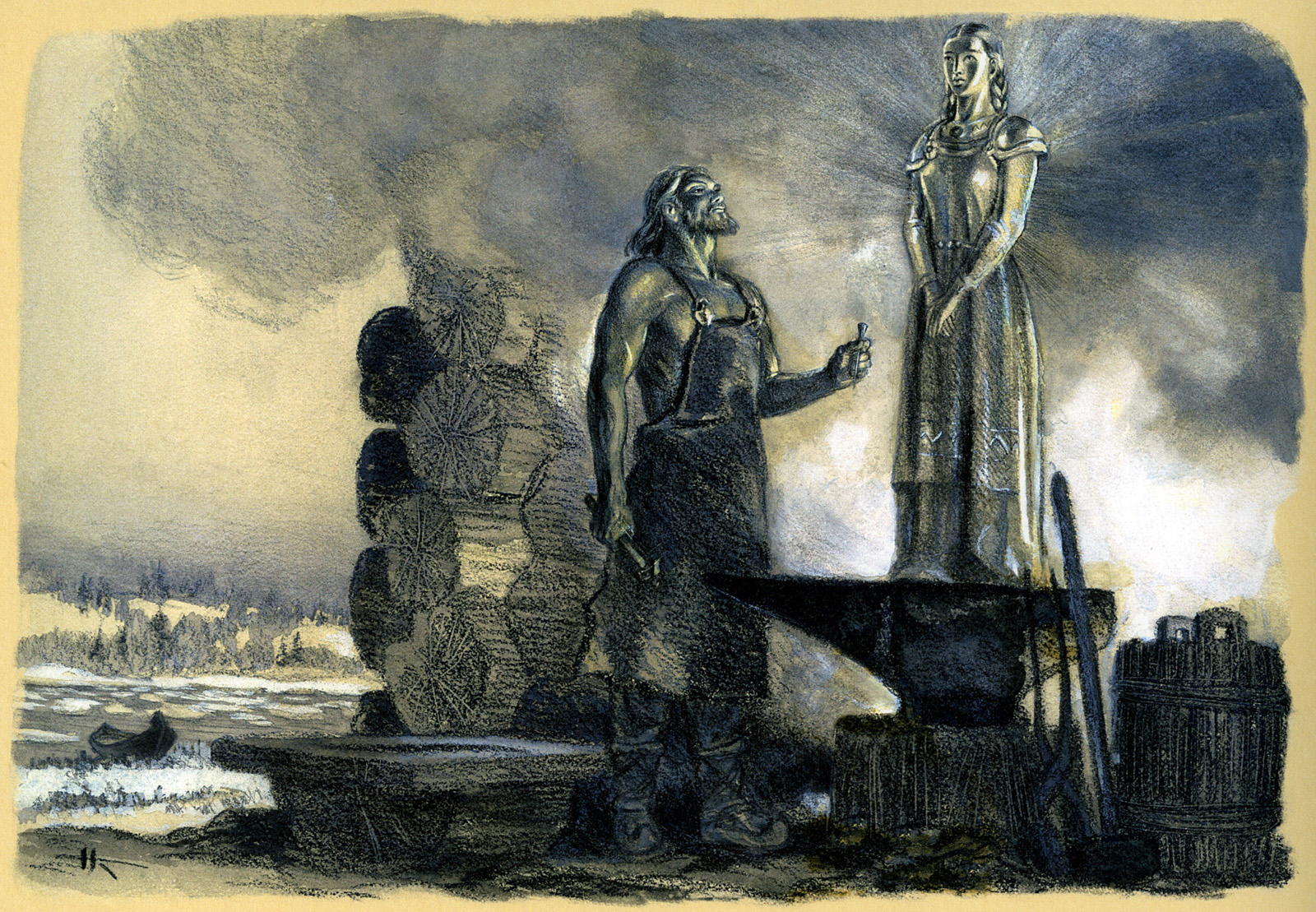
nicolai kochergin_kalevala_15_ilmarinen makes a new wife of silver and gold_01      nicolai kochergin_kalevala_05_ilmarinen crafts the sampo_02

nicolai kochergin_kalevala_05_ilmarinen crafts the sampo_01    nicolai kochergin_kalevala_04_vainamoinen seeks the beauty of pohjola_03